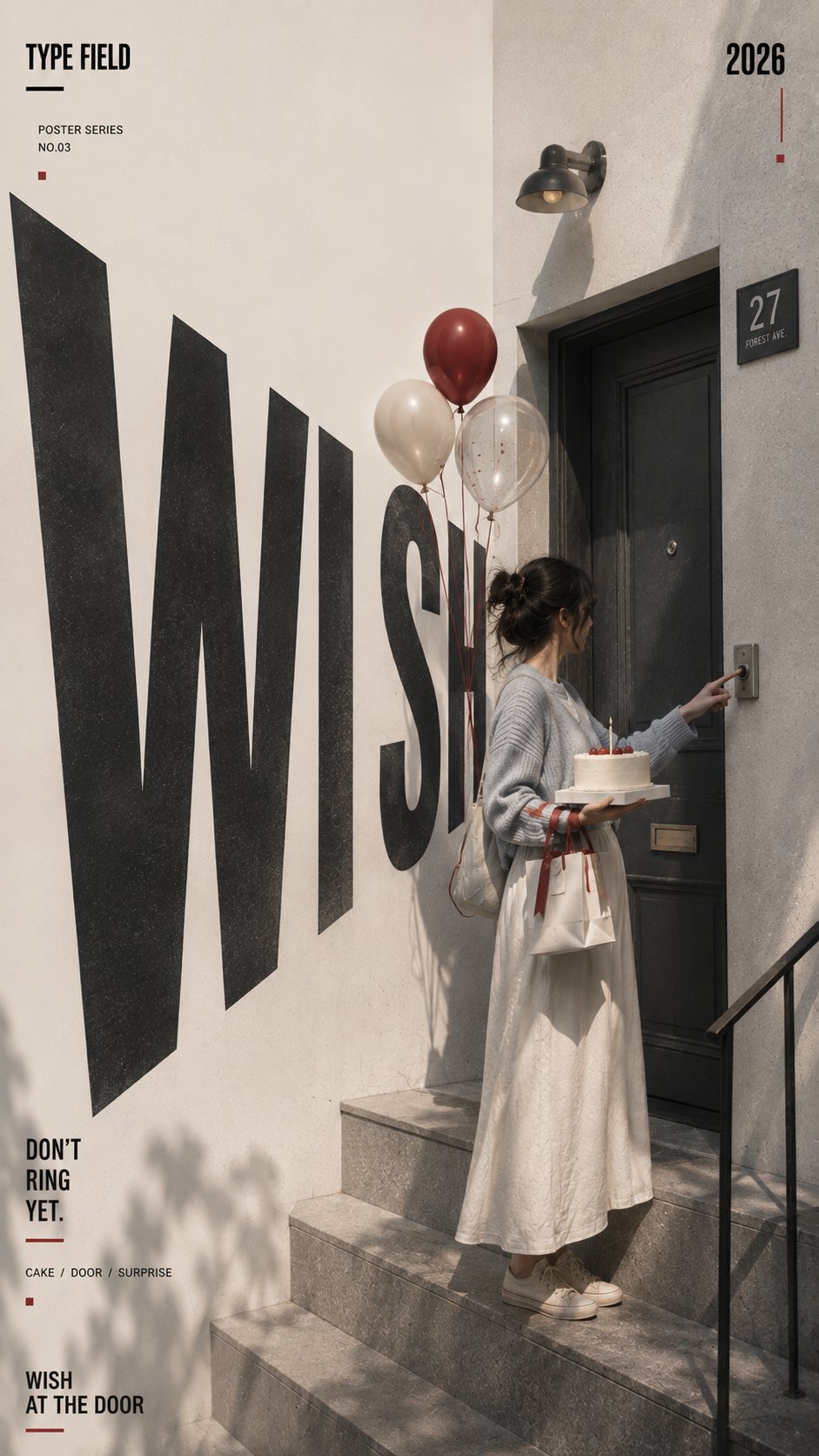
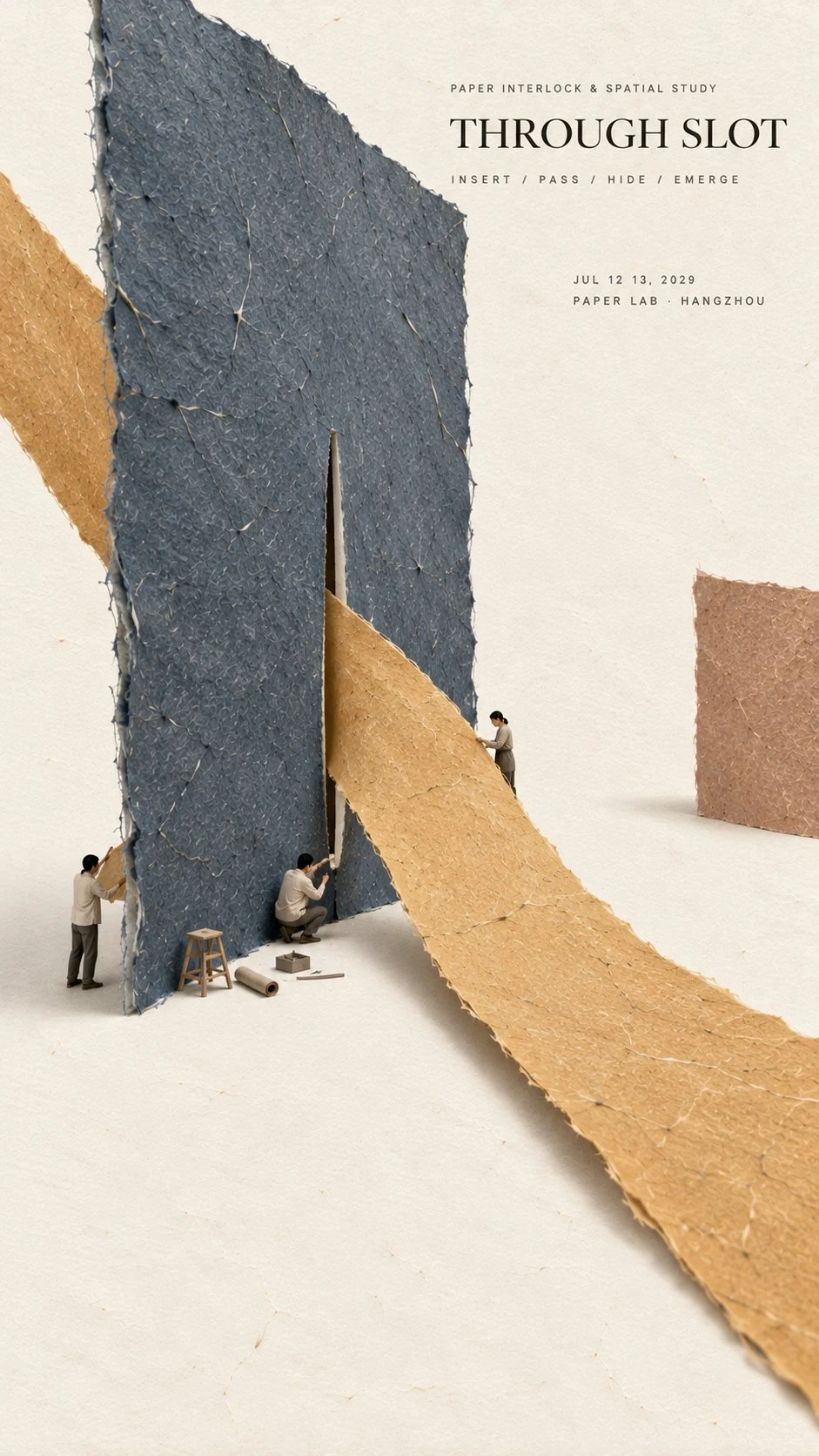
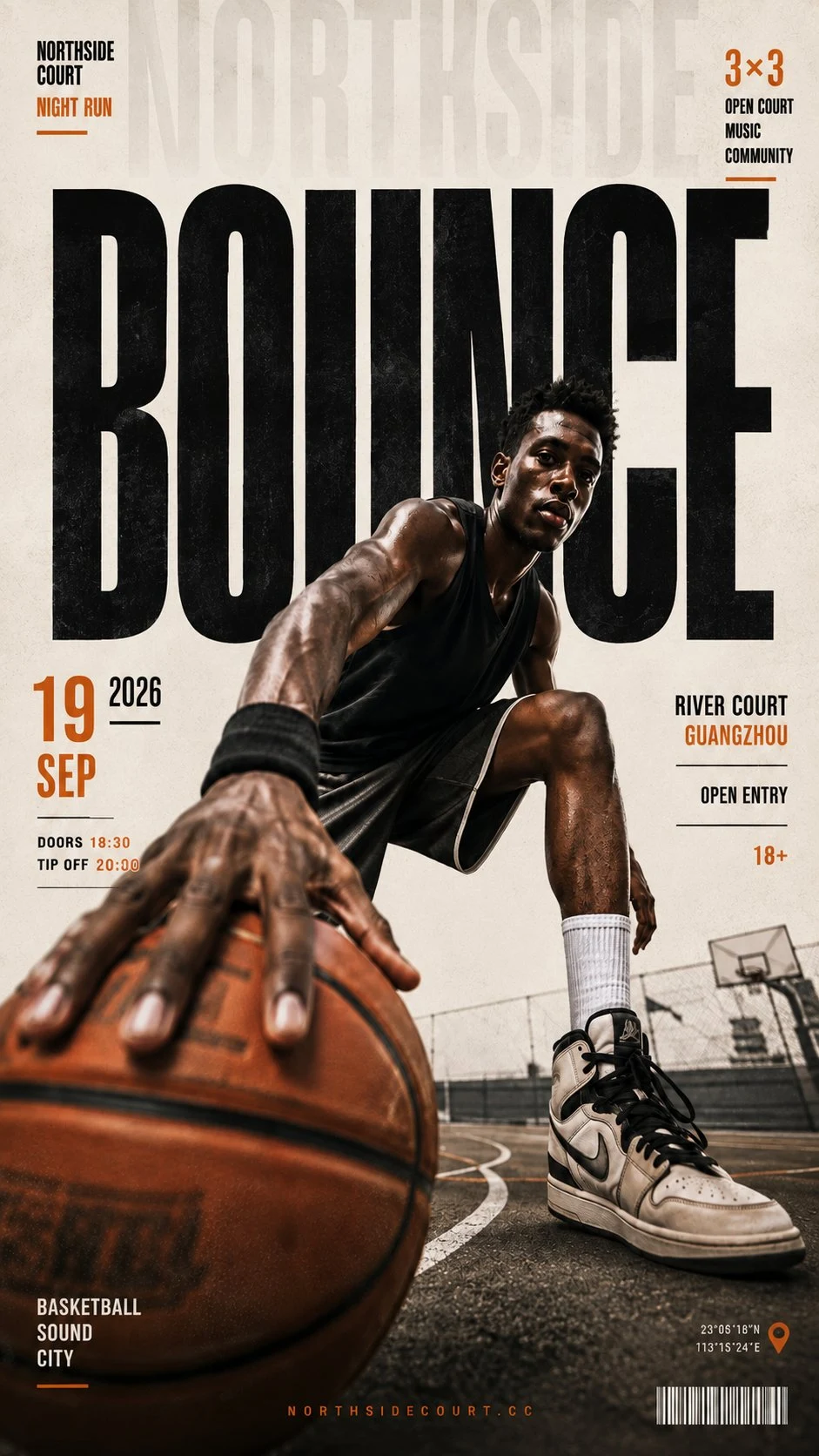
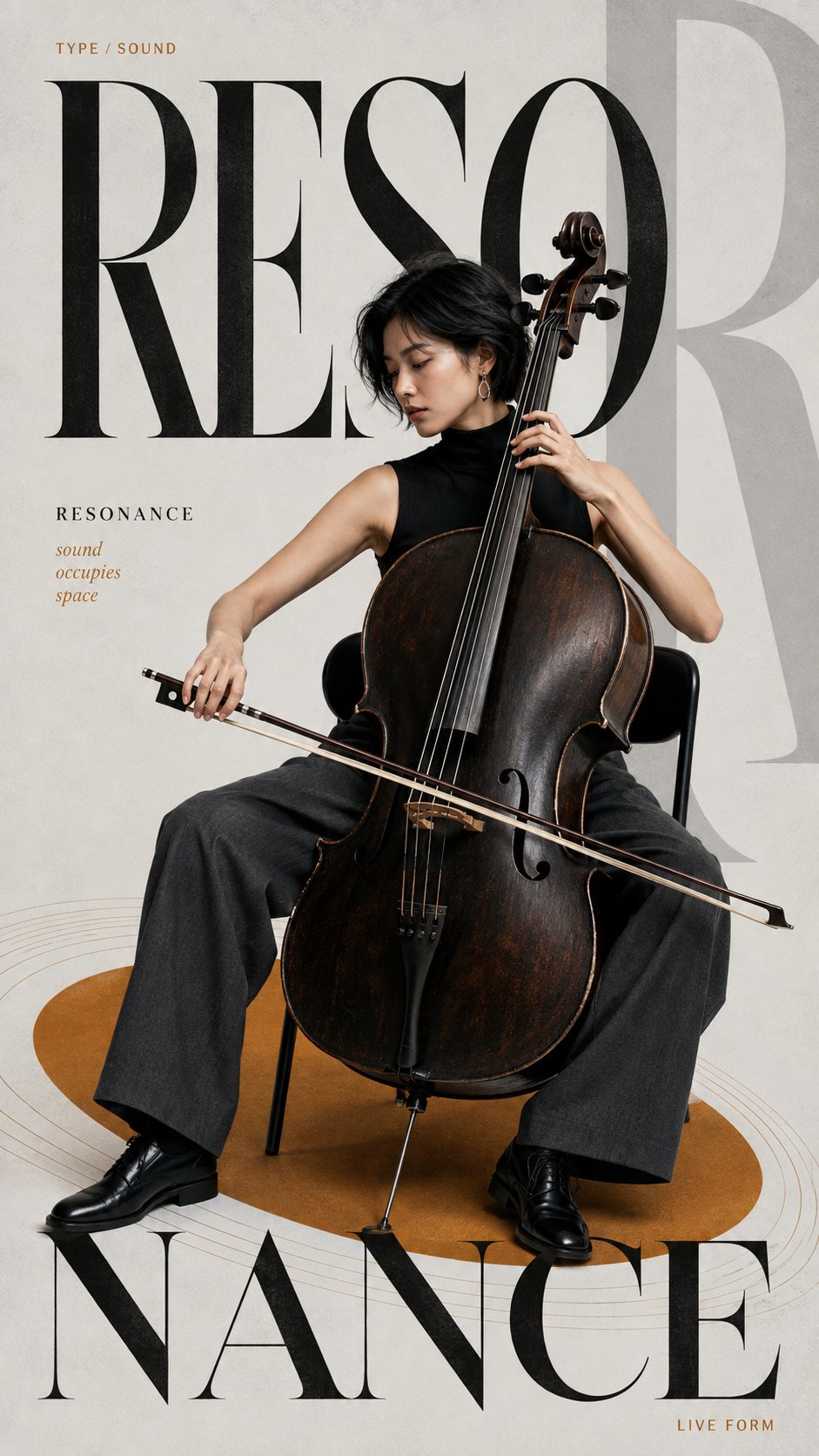
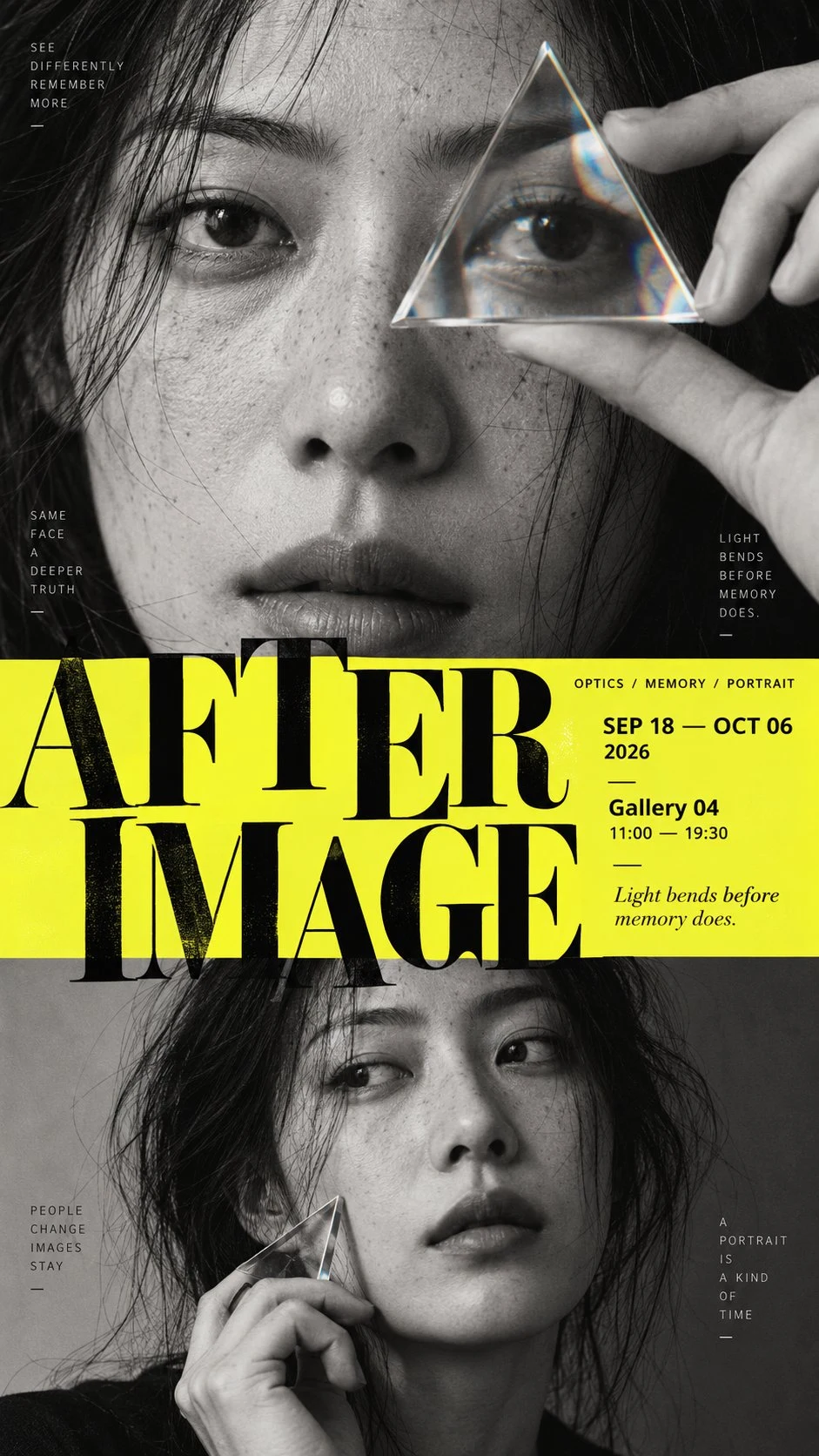
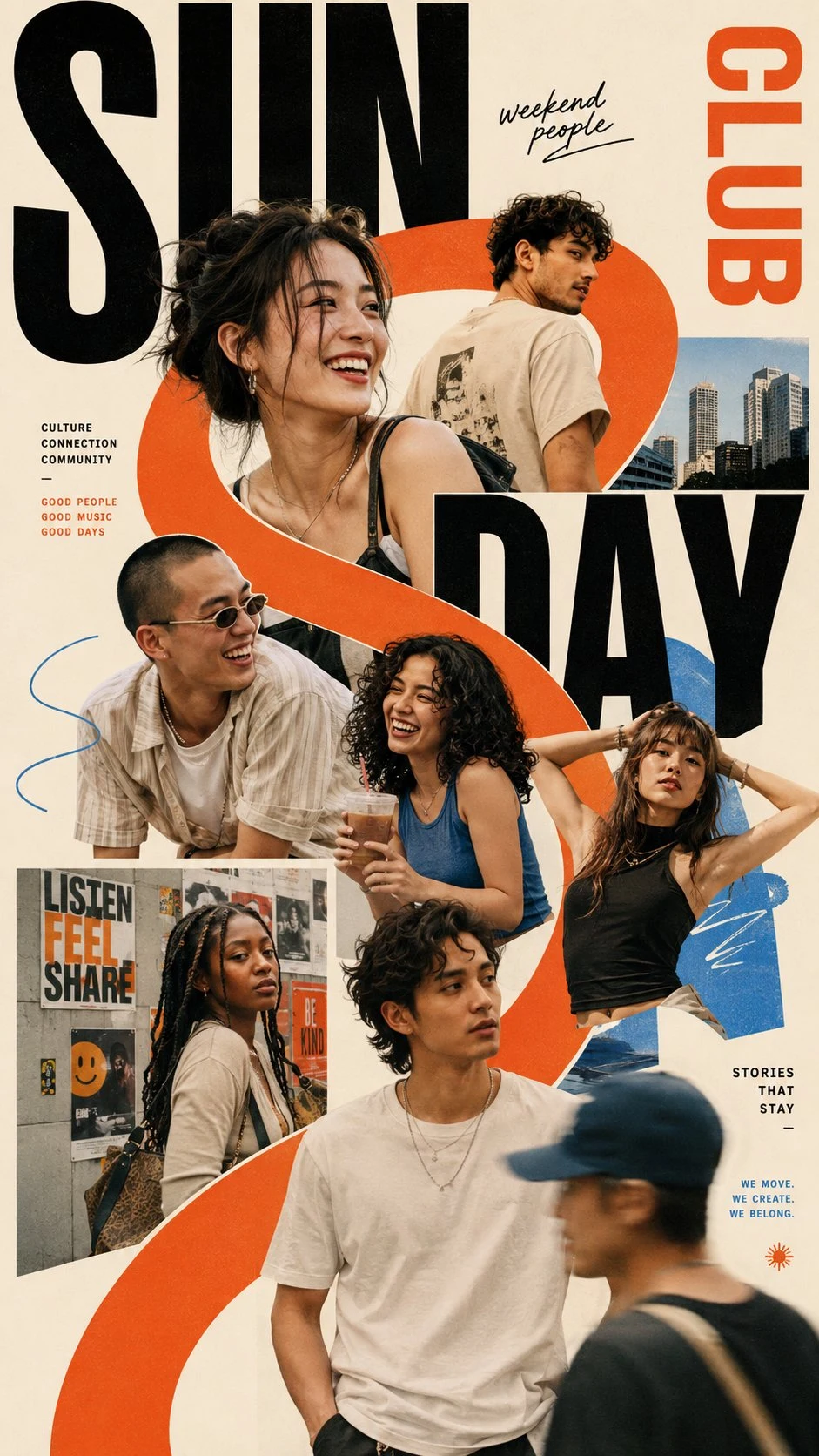
[STORY MOMENT]: {birthday surprise / first day opening a shop / reading a letter / finding a stray cat / etc.}
[CHARACTER]: {age, gender, appearance, outfit}
[ACTION]: {the exact moment being captured}
[ARCHITECTURAL FRAGMENT]: {doorway / steps / storefront / mailbox wall / corridor / etc.}
[TITLE]: {one short keyword}
[ACCENT COLOR]: {red / blue / orange / etc.}
[SHORT LINE]: {one meaningful sentence}
[SUBTITLE]: {short story label}
[FORMAT]: 9:16
Create a vertical editorial poster built around one small but meaningful moment from everyday life.
Show a realistic adult character naturally caught in the middle of an action, with a readable face, subtle emotion, and no camera awareness. The scene should feel like a real lifestyle photograph with a story already happening inside it, not a posed fashion shoot or commercial ad.
Do not show the entire environment. Keep only the architectural fragments and objects needed to tell the story, such as a doorway, steps, mailbox, shutter, wall, window, bag, cake, letter, records, plants, or other relevant details. Leave generous clean negative space around the main composition.
Set “{TITLE}” in oversized bold condensed typography and integrate it deeply into the physical space. Match the letters to the perspective of walls, doors, stairs, floors, shutters, or other architectural planes. Use strong near-to-far scale changes and clear vanishing directions so the typography feels embedded in the environment rather than placed flat over the image.
Let the character, objects, door frames, railings, furniture, or architectural edges overlap and interrupt parts of the letters. Keep the title visually powerful but make the story moment the emotional focus.
Use an off-white, cool gray, concrete gray, or muted neutral base with subtle paper and print texture. Avoid strong yellow casts, sepia tones, dirty grunge, or overly warm vintage filters. Keep skin tones natural and clean. Use {ACCENT COLOR} only in a few small graphic details.
Include:
TYPE FIELD
2026
{TITLE}
{SHORT LINE}
{SUBTITLE}
Keep supporting text minimal and meaningful. Avoid random filler copy, excessive technical data, numbering, logos, watermarks, sparkles, and decorative clutter.