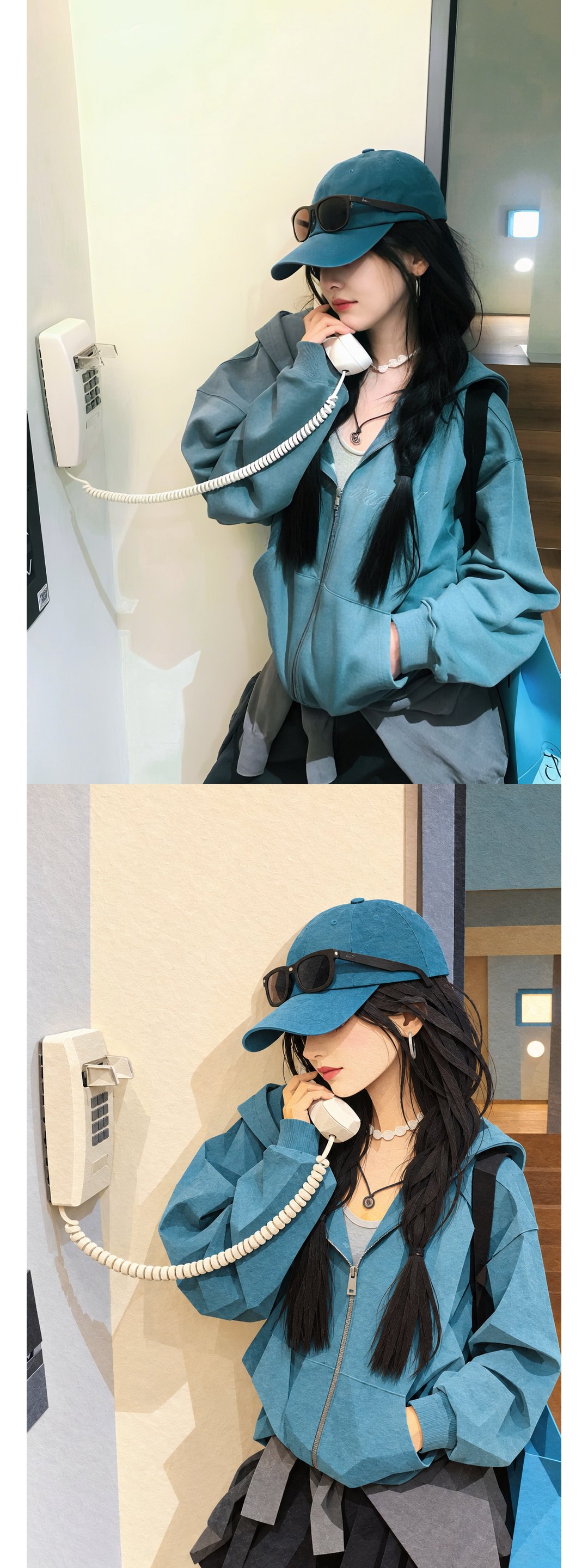
Use the single uploaded photograph as the sole content source. Transform it into one finished handcrafted layered-paper storybook scene. Output only the transformed image—do not include the original photograph, a before-and-after comparison, split layout, collage, caption, explanation, border, or mockup. Preserve the source image’s aspect ratio and general framing.
Faithfully preserve the main subject’s identity cues, age category, gender presentation, skin tone, hairstyle, facial hair, glasses, expression, gaze direction, pose, body orientation, clothing categories, garment colors, accessories, and interaction with important objects. Keep the exact number of principal people and preserve their spatial relationships. Retain all objects necessary to understand the action. Do not add, remove, duplicate, or replace important subjects, limbs, tools, garments, or props.
Redesign the person as a charming contemporary paper-cut storybook character with a slightly enlarged head, softly simplified facial anatomy, compact proportions, expressive dark eyes, clean eyebrows, a small nose and mouth, subtle rosy cheeks, and a warm natural expression matching the source. Preserve distinguishing facial structure, hair silhouette, facial hair, eyewear, and clothing so the subject remains recognizable. Adults must retain an adult appearance; avoid infant proportions, extreme chibi anatomy, oversized sparkling eyes, or a generic identical doll face.
Construct the entire image as a dimensional handmade paper diorama using layered cut cardstock, fibrous handmade paper, lightly embossed paper, and occasional soft felt-like paper surfaces. Every person, object, plant, architectural element, and landscape feature must visibly consist of overlapping cut-paper pieces. Show tactile paper grain, slightly irregular hand-cut edges, folded planes, stacked layers, shallow relief, clean silhouettes, and soft contact shadows between layers. Avoid photorealistic materials, plastic toys, clay, crochet, glossy CGI, flat vector graphics, or smooth digital painting.
Identify the photograph’s dominant everyday action and its most meaningful object, then turn that relationship into a gentle visual metaphor. The metaphor must grow directly from the source rather than introduce an unrelated fantasy. For example, fabric may become folded mountains, food may expand into an orchard, water may form a miniature garden landscape, or the contents of a bag may become a tiny symbolic world. Use this principle adaptively—do not copy these examples when they do not match the uploaded photograph. Preserve the original action exactly while allowing the key object or surrounding surface to unfold into a coherent miniature paper world that expresses the action’s emotional theme.
Keep the main character large and dominant in the foreground. Surround the character’s silhouette with a narrow warm-ivory paper edge, like a raised die-cut storybook figure. Integrate this figure naturally into the layered scene rather than making it look pasted onto an unrelated background. Preserve the source setting’s recognizable structure—such as a room, balcony, kitchen, garden, doorway, table, or landscape—but simplify it into broad paper shapes. Remove incidental clutter, unreadable labels, duplicate objects, and distracting background details. Expand only the central storytelling element into an imaginative environment.
Use strong foreground, middle-ground, and background separation. Place small paper elements at different depths to create a theatrical miniature-set effect: foreground foliage or props, the main subject and action in the middle ground, and simplified architecture, hills, trees, clouds, or distant scenery behind them. Use overlapping shapes rather than realistic perspective detail. Keep the composition balanced and readable, with the principal action remaining the clearest focal point.
Use a warm, muted, nature-inspired palette derived from the source photograph: sage and olive greens, mustard, terracotta, dusty blue, cream, warm brown, charcoal, and restrained pastel accents. Preserve signature clothing and object colors. Use broad matte color fields with subtle variations from paper fibers, avoiding neon colors and photographic gradients. Light the scene with warm diffused daylight from the same general direction as the source, producing soft shadows beneath raised paper layers and a cozy handcrafted atmosphere.
Render plants, trees, clouds, mountains, waves, furniture, textiles, and small decorative objects as simplified cut-paper forms with enough detail to remain identifiable. Use repeated leaf shapes, scalloped clouds, angular folded mountains, layered waves, tiny buildings, and miniature props only when relevant to the source story. Keep hands complete and naturally connected to objects. Preserve occlusion and contact accurately so tools, containers, clothing, and environmental elements remain physically understandable.
The finished image should feel like a premium children’s picture-book illustration, stop-motion paper theater, and collectible dimensional papercraft artwork: imaginative but grounded in the uploaded moment, tactile, warm, polished, emotionally gentle, and rich in small narrative details. Avoid photorealism, anime rendering, plastic 3D characters, smooth vector art, watercolor, yarn embroidery, malformed hands, duplicated limbs, changed actions, missing props, unrelated fantasy objects, excessive clutter, text, logos, signatures, watermarks, and visible comparison layouts. Output only the completed transformed paper-diorama image.