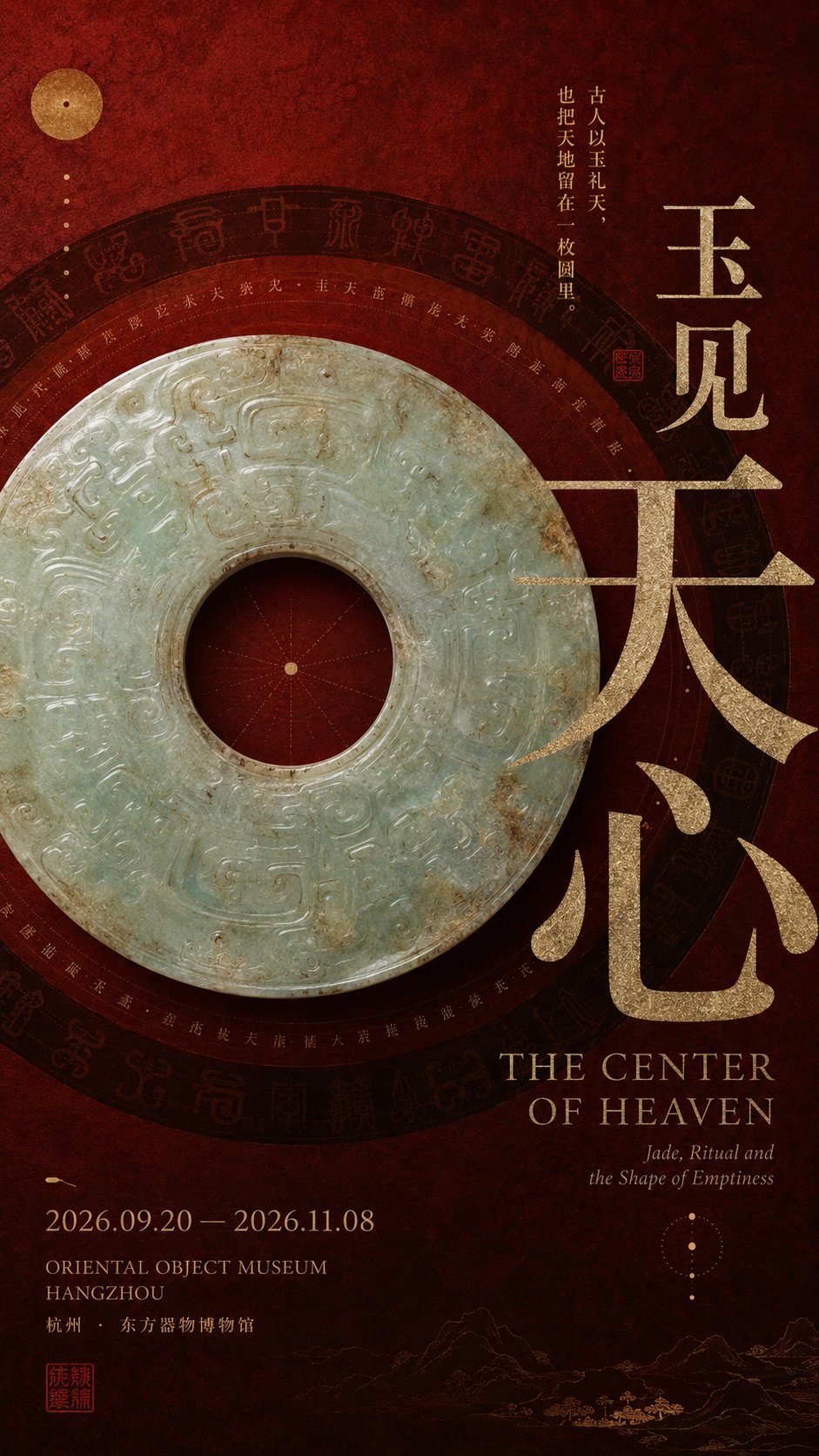
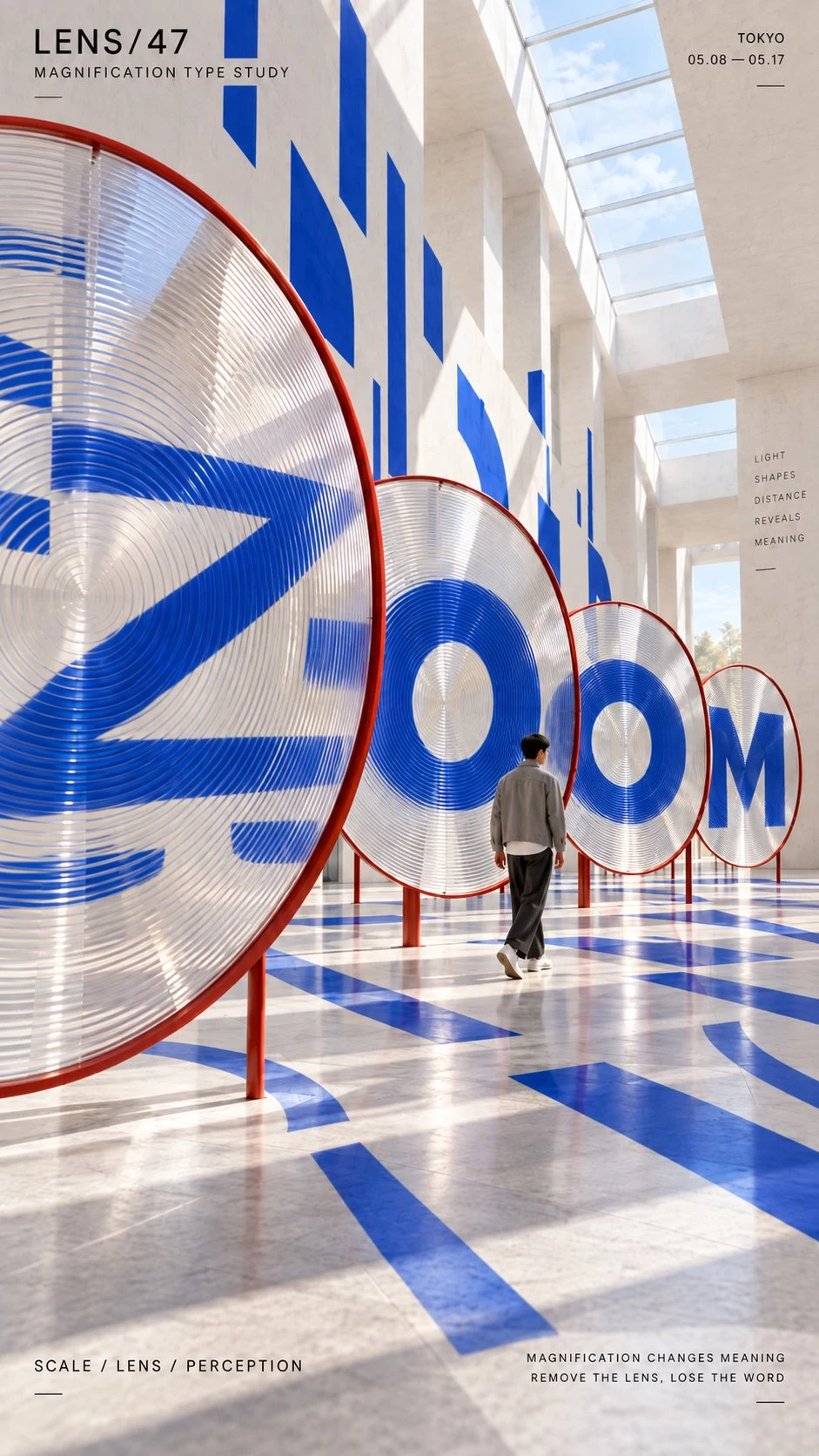
[Theme / Work Title]: ____
[Core Artifact]: ____
[Cultural Motif / Story]: ____
[Aggregation Method]: Concentric Structure / Narrative Reflux / Typography Core Compression / Light Field Focus / Other
[Chinese Title]: ____
[English Title]: ____
[Main Color Tone]: ____
[Auxiliary Color]: ____
[Exhibition Information]: ____
[Aspect Ratio]: 9:16
Generate an Editorial Poster with the refined aesthetic of an advanced Eastern cultural exhibition.
First establish an absolute visual core, then guide artifacts, text, color fields, landscapes, patterns, light and shadow, or spatial relationships to collectively direct the viewer's gaze toward this core.
Avoid simply placing the main subject in the center of the frame; instead, select a truly meaningful "aggregating force" based on the content:
- Concentric Structure: Use circular artifacts, ring-shaped text, patterns, and negative space to converge layer by layer toward the center;
- Narrative Reflux: Let mountain contours, river flows, mist, figures, or directional movements in the story form a continuous visual path that ultimately loops back to the subject;
- Typography Core Compression: Apply large characters, color blocks, and white space to exert pressure from multiple directions toward the subject, with the text itself participating in the composition rather than being tacked on beside it;
- Light Field Focus: Through gradations of light and dark, light range, and spatial depth, make the brightest or most important point naturally emerge as the visual center.
Artifacts must convey authentic materiality, texture, patina, wear, and a sense of weight, while seamlessly integrating with the background's visual language—avoid treating them like product shots simply pasted onto the poster.
Typography must serve the work's content. Titles, poetic lines, short passages, and exhibition details should all relate directly to the artifacts and cultural theme, without including placeholder text like "visual aggregation core," "case study," or "design research."
Limit colors to 2–4 primary hues, drawing from Eastern palettes such as vermilion, ink black, celadon, ochre, bronze green, amber gold, or rice paper white; establish hierarchy through variations in intensity, temperature, and brightness.
Preserve ample negative space to keep the composition rich yet uncluttered. The first glance captures the visual core, the second reveals how surrounding elements aggregate toward it, and the third allows reading of the title and cultural details.
Overall Requirements:
Eastern Artifacts × Contemporary Editorial Design × Museum Poster
Infuse cultural depth, design ingenuity, and a sense of complete artwork—avoid templated posters.