【Core Chinese Character】: Enter one character (e.g., "Banquet," "City," "Travel," or "Mountain").
【Theme】: Enter the theme of the ancient painting corresponding to the character's meaning.
【Content within the Painting】: Figures, landscapes, architecture, objects, flora, etc.
【English Title】: Enter the English exhibition title.
【Subtitle】: Enter a descriptive sentence for the exhibition.
【Thematic Phrase】: Enter a short, evocative phrase.
【Primary Color Palette】: Use a low-saturation, Oriental color scheme.
【Time & Location】: Enter exhibition details.
【Aspect Ratio】: 9:16.
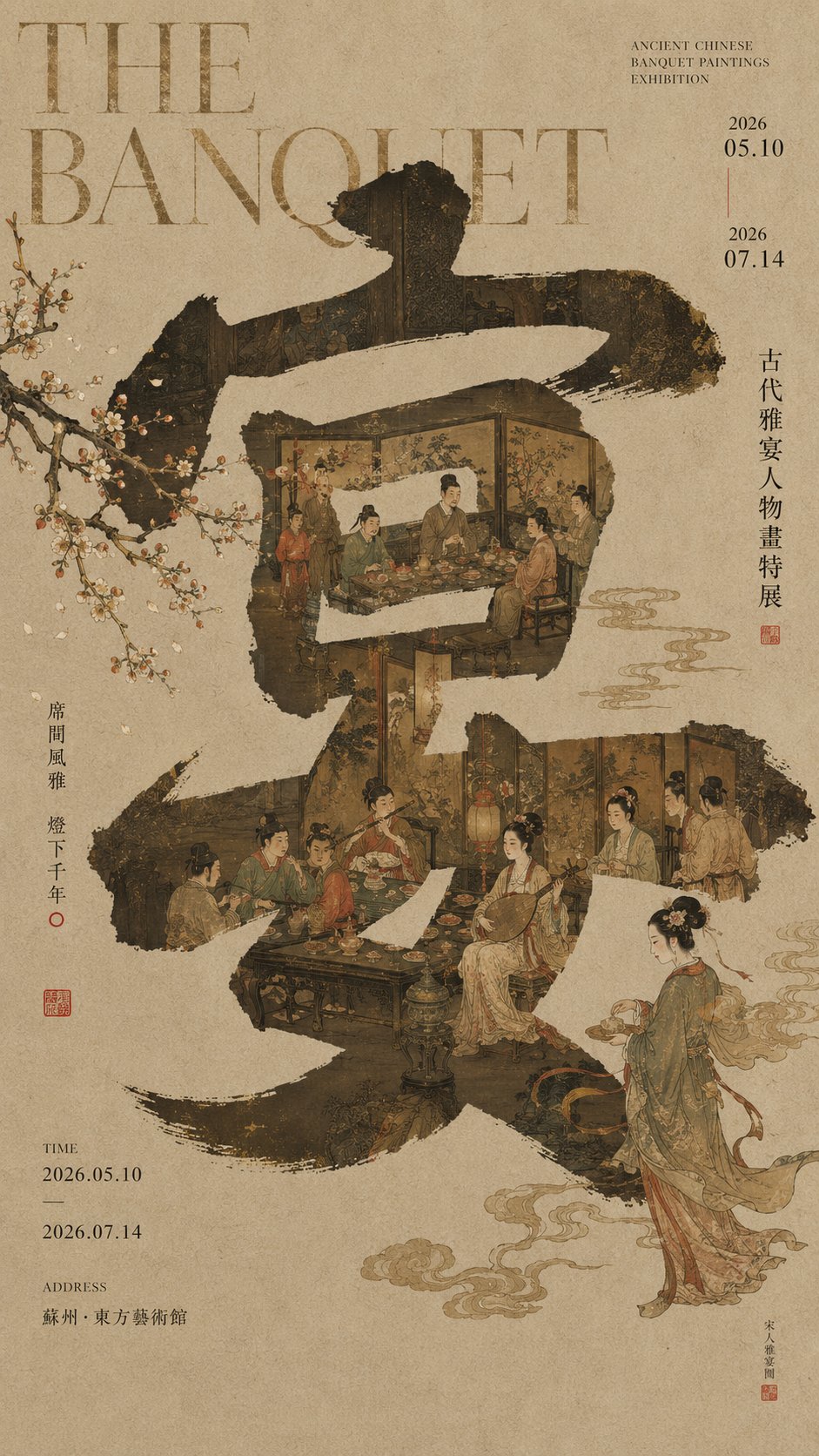
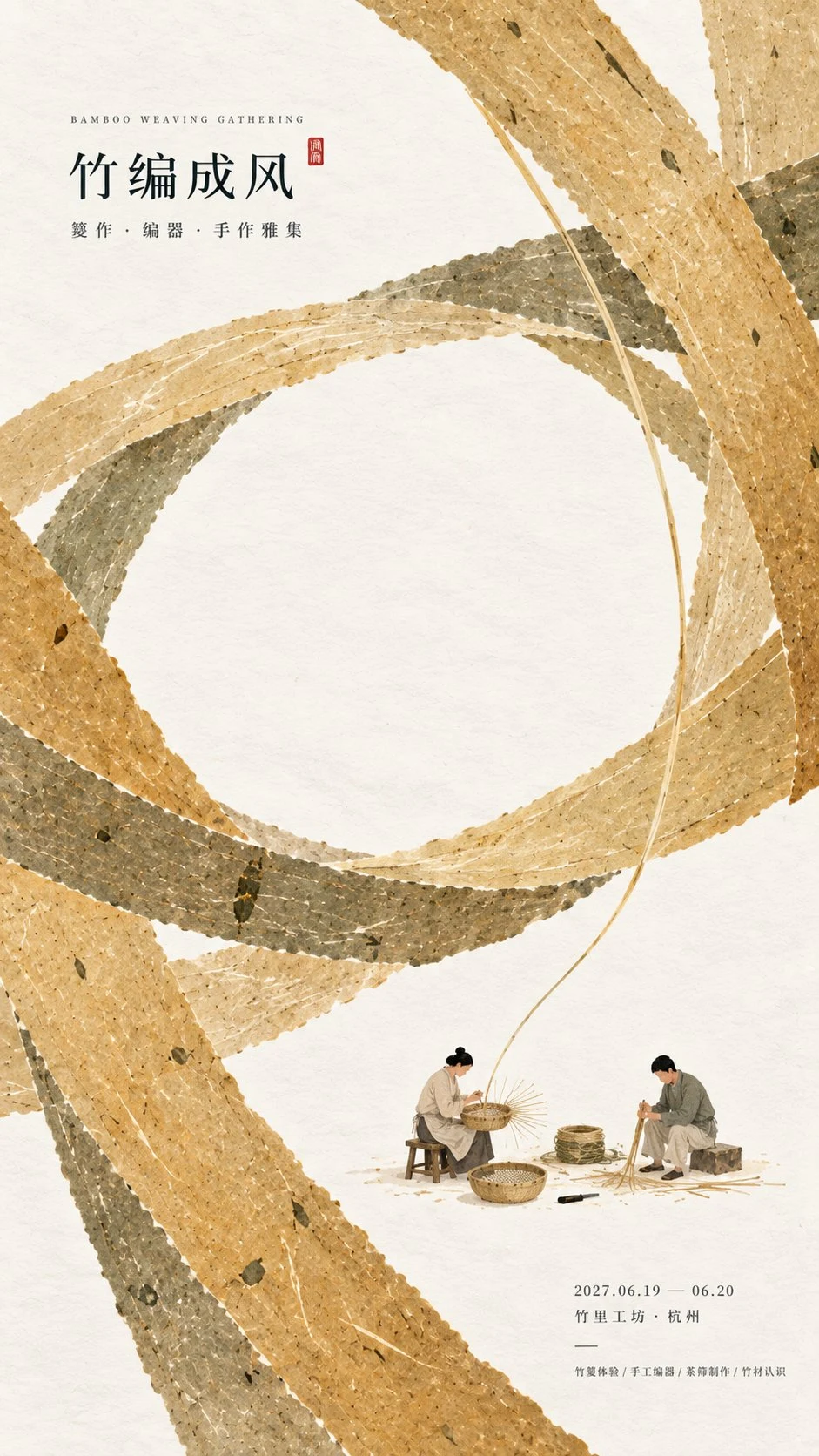
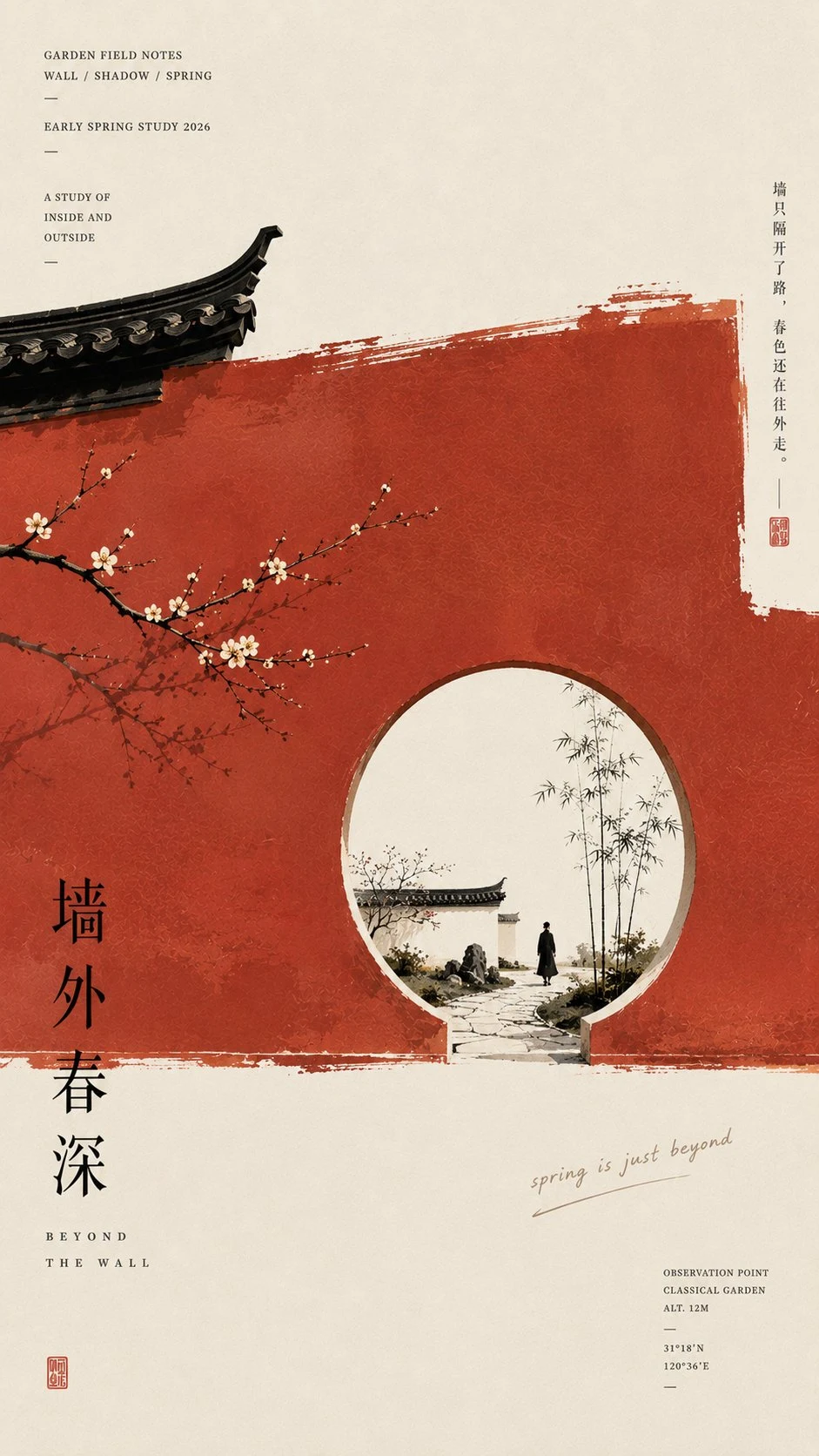
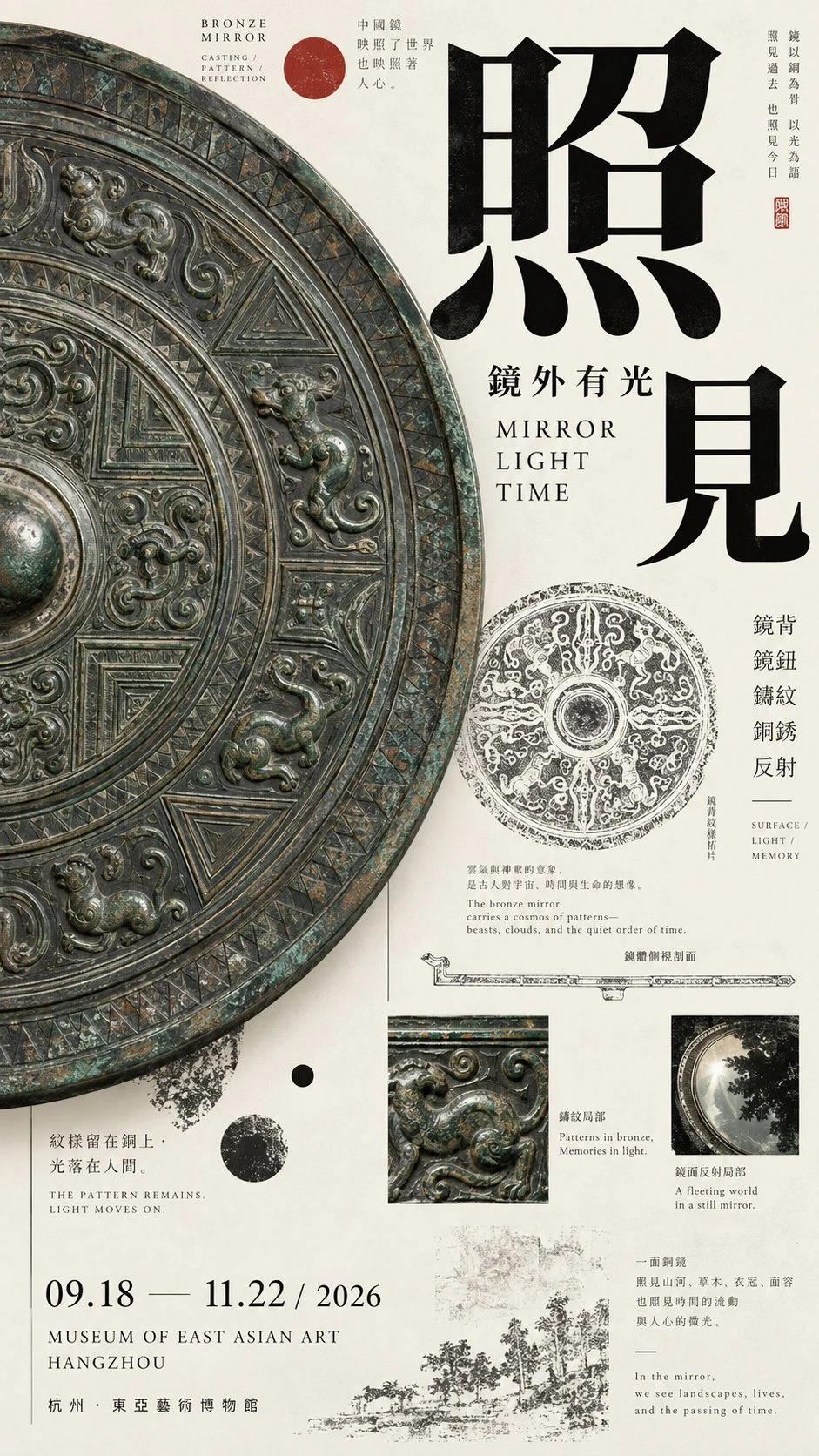
Design a poster that reconstructs text using an ancient Oriental painting, embodying the concept of "One Character, One Realm."
Use a warm, beige *xuan* paper or silk texture as the background, maintaining ample, clean negative space. Feature a massive [Core Chinese Character] as the visual backbone of the poster; the typeface should evoke archaic calligraphy, *Lishu* (Clerical Script), or stone-rubbing aesthetics—characterized by natural stroke-width variations, dry-brush effects (*feibai*), ink breaks, and authentic brush edges—avoiding modern, uniform fonts.
Do not simply crop an entire ancient painting into the shape of the character. Instead, reorganize the [Content within the Painting] based on the structure and meaning of the [Core Chinese Character]. Assign specific elements—such as figures, architecture, paths, landscapes, or objects—to different strokes, creating a genuine interplay between the "character form" and the "pictorial narrative."
Concentrate complex details primarily within the character itself, while exercising restraint outside its boundaries. Allow approximately 5%–15% of elements to naturally extend beyond the character's outline—such as a figure's sleeve, a flowering branch, a banner, a horse's head, water ripples, clouds, pine boughs, or the corner of a pavilion—evoking a sense of vitality where the "world within the character" is growing outward.
Incorporate a large, high-contrast English serif title at the top or side, complemented by a minimal amount of vertical Chinese text (subtitle and thematic phrase), TIME, ADDRESS, and a small cinnabar-red seal. Ensure a clear typographic hierarchy without cluttering the design with meaningless fine print.
Apply the [Primary Color Palette] throughout; the style should be low-saturation and refined, blending the aesthetic of ancient silk paintings with modern editorial design. The final result should resemble a sophisticated Oriental cultural exhibition piece rather than a generic "Chinese-style" template. Avoid: simply tiling ancient paintings within the typography, modern bold sans-serif fonts, stock image collages, cluttered full-bleed details, excessive vintage filters, high-saturation colors, a "travel brochure" aesthetic, garbled text, logos, watermarks, and image reference numbers.