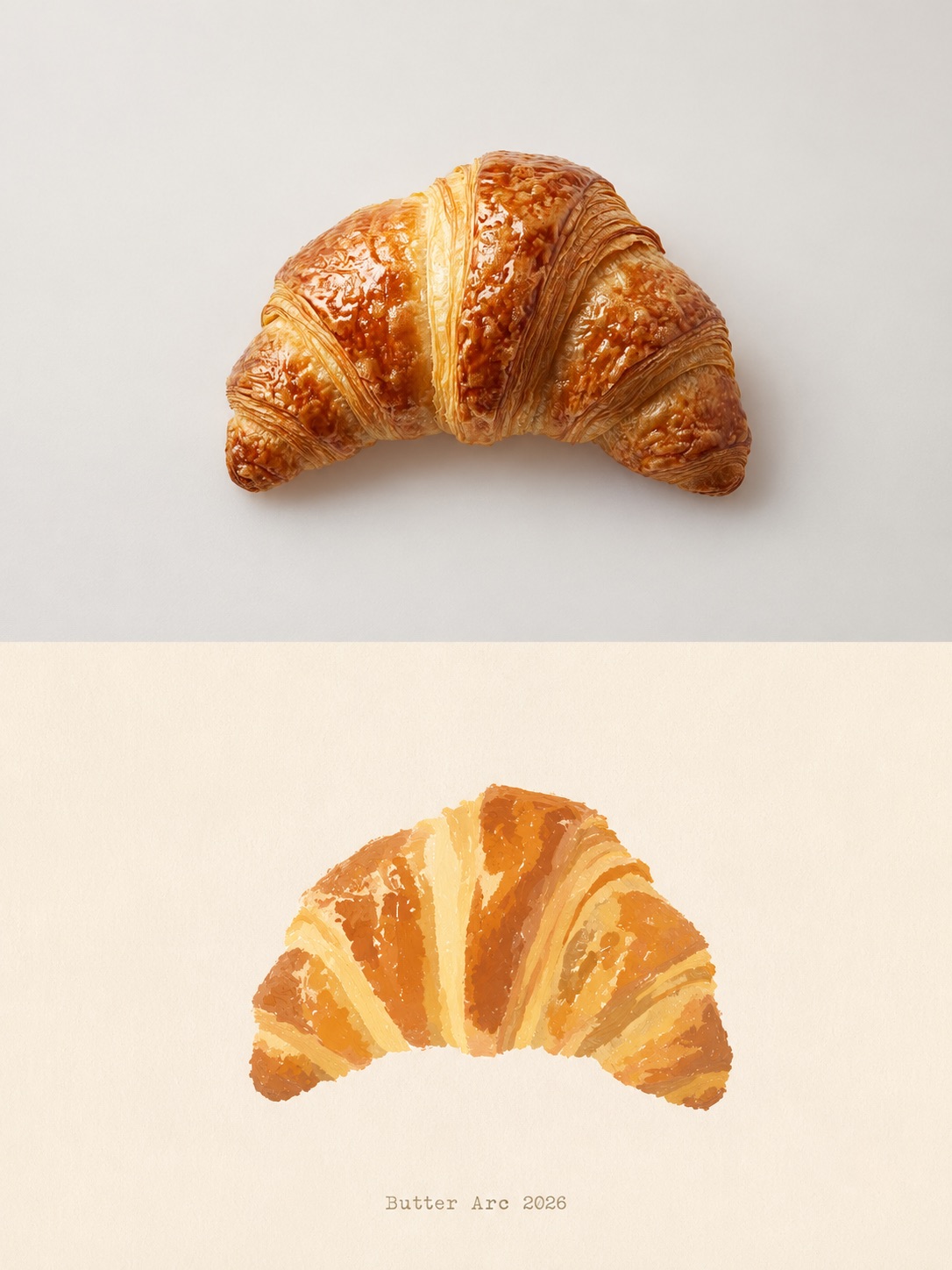
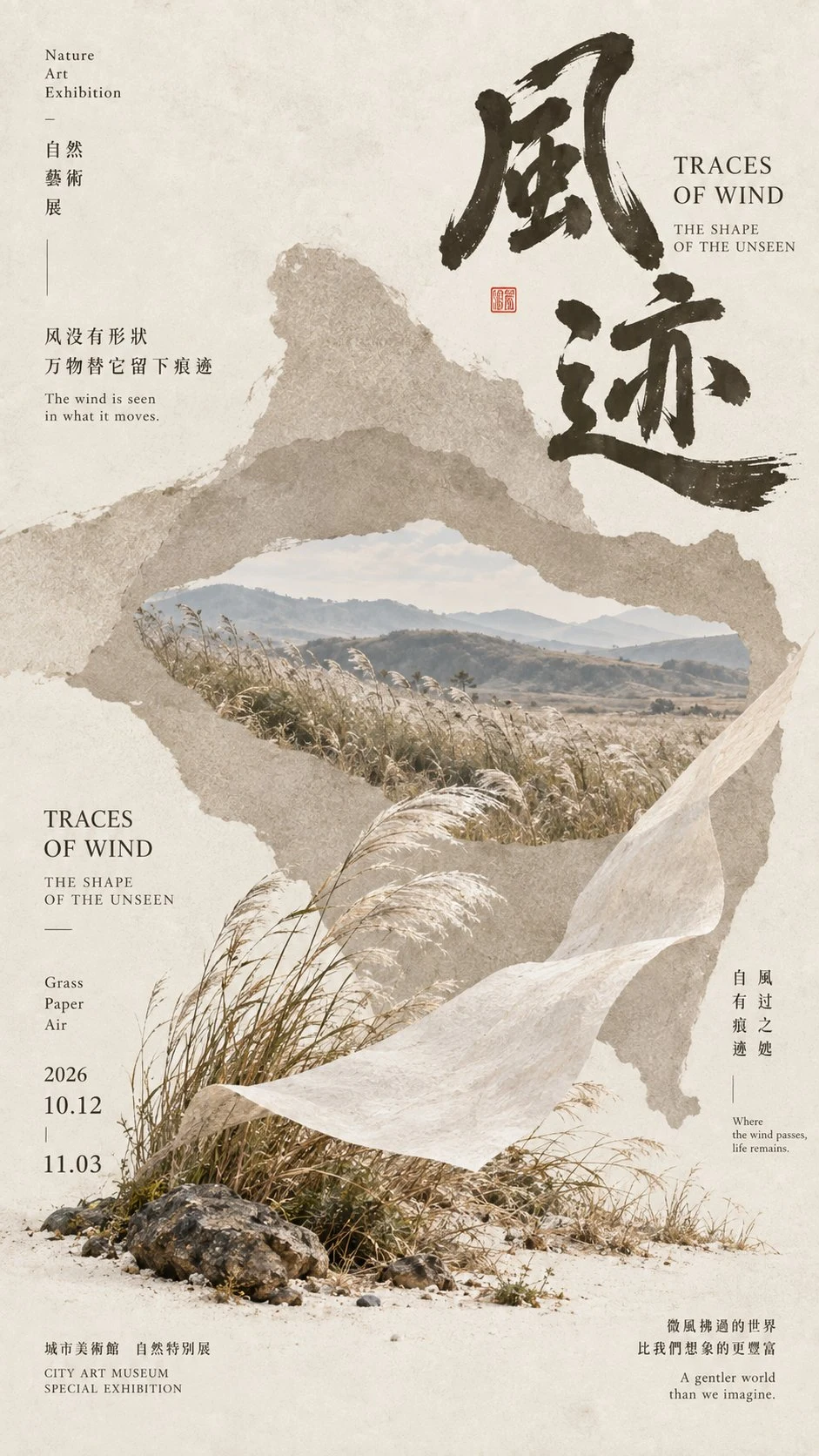
Create a high-end minimalist poster from the uploaded photo in a 3:4 vertical format.
For a landscape photo, use a horizontal 50:50 division with the photo above and the graphic section below. For a portrait photo, use an asymmetrical vertical division with the photo occupying the left 40% and the graphic section occupying the right 60%.
Fit the entire original subject fully within its designated photo section. Preserve its original scale, framing, proportions, textures, lighting, shadows, colors, and atmosphere. Never zoom in, crop, clip, distort, or enlarge the subject to fill the section. If needed, extend only the surrounding background to fit the layout.
In the graphic section, reinterpret the same subject as a flat, hand-painted gouache composition. Preserve its overall silhouette, proportions, major structures, and recognizable features.
Make the gouache subject moderately sized and visually isolated, occupying approximately 50–55% of the available width or height, whichever limit is reached first. Center it precisely with balanced negative space on every side. Do not crop it or place it near any edge.
Use only 4–12 key colors extracted from the original photo. Use one flat base color per visible plane and define structure through shapes and overlaps only.
Create an opaque matte gouache appearance with visible brushstrokes, slightly uneven paint density, dry-brushed exposed paper, subtly feathered edges, broken contours, and natural hand-painted irregularities.
Do not use gradients, highlights, reflected light, volumetric shading, realistic depth, or cast shadows in the graphic section.
Use a warm beige, soft ivory, or similar light neutral background only within the graphic section.
If appropriate, add a small 1–3 word English title inspired by the subject’s form, material, function, movement, or atmosphere, followed by a four-digit year. Use a very small vintage typewriter-style serif font.
Keep the overall composition quiet, spacious, refined, and editorial. Avoid commercial template layouts, cartoonish or vector-like rendering, excessive decoration, and visual clutter.