The eyes should feature realistic central heterochromia: each iris has a distinct [COLOR 1] zone surrounding the pupil and a contrasting [COLOR 2] outer iris radiating outward from it. The inner color should not form a perfect circular ring. Instead, it should break organically through the iris with natural uneven “peaks and valleys,” irregular feathered edges, branching color spikes, soft pigment blooms, and subtle jagged transitions that follow the eye’s radial fiber structure. Some areas of the [COLOR 1] should extend farther outward toward the outer iris, while other areas should recede closer to the pupil, creating an asymmetrical but believable natural pattern.
The color transition should blend through the collarette and radial iris striations, with layered pigmentation, tiny iris crypts, subtle speckling, darker and lighter pigment variations, and a realistic limbal ring. The heterochromia should look anatomical, human, and organic, like natural pigment variation inside the iris, not a glowing magic ring, painted contact lens, flat graphic circle, perfect target shape, cybernetic implant, or artificial fantasy design.
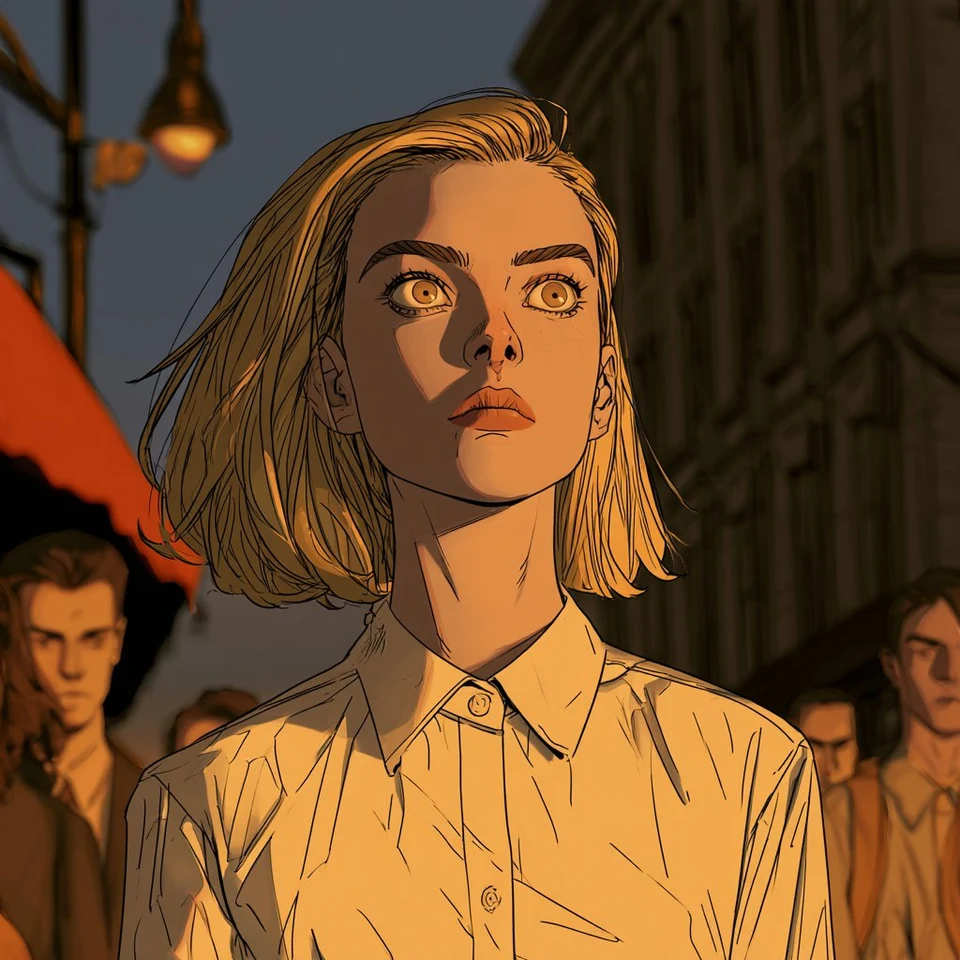
Use the supplied image as the absolute authority for the central character’s identity, species, anatomy, facial structure, body proportions, silhouette, hairstyle or head shape, expression language, distinctive features, color palette, material cues, symbolic motifs, and overall visual presence. Preserve clear recognizability. Do not copy the supplied pose, background, camera angle, or outfit unless specifically requested.
The character must be unmistakably adult. Preserve the character’s established gender presentation, species, body logic, anatomy, non-human traits, and identity-defining features. Retain unique skin markings, scars, tattoos, textures, facial markings, body markings, prosthetics, cybernetics, horns, ears, tails, wings, fins, claws, armor pieces, jewelry, masks, helmets, visors, hoods, eyepatches, headpieces, or other distinctive traits.
Do not copy the supplied outfit. Create a new scene-appropriate interpretation of visible neck or shoulder clothing only if clothing is required by the character’s established presentation. Any newly generated garment should remain secondary, mostly shadowed, and derived from the supplied image’s palette, materials, motifs, and design language.
If one or both eyes are closed, keep them closed. If eyes are hidden, covered, masked, shadowed, obscured by hair, or concealed by any design element, keep them hidden. Do not reveal, invent, or reposition hidden eyes. If eyes are visible, preserve their shape, color, iris details, pupil shape, markings, glow, asymmetry, and distinctive design.
The generated image must inherit the supplied image’s color palette, design language, material cues, decorative motifs, symbolic motifs, and overall aesthetic identity. Reinterpret these traits into the new image so it feels unmistakably derived from the supplied image’s visual world.
Create an intense head-shot portrait of the central character, framed around the head and face. Preserve the character’s natural head structure, facial anatomy, species-specific features, proportions, and silhouette. Do not beautify, humanize, feminize, masculinize, or otherwise reshape the face beyond what is already established by the supplied image.
Use a dramatic close-up composition with strong asymmetry and a subtly tilted camera angle. The character should dominate the frame, with the face positioned slightly off-center rather than perfectly symmetrical. Keep the framing intimate and visually aggressive without distorting identity-defining anatomy.
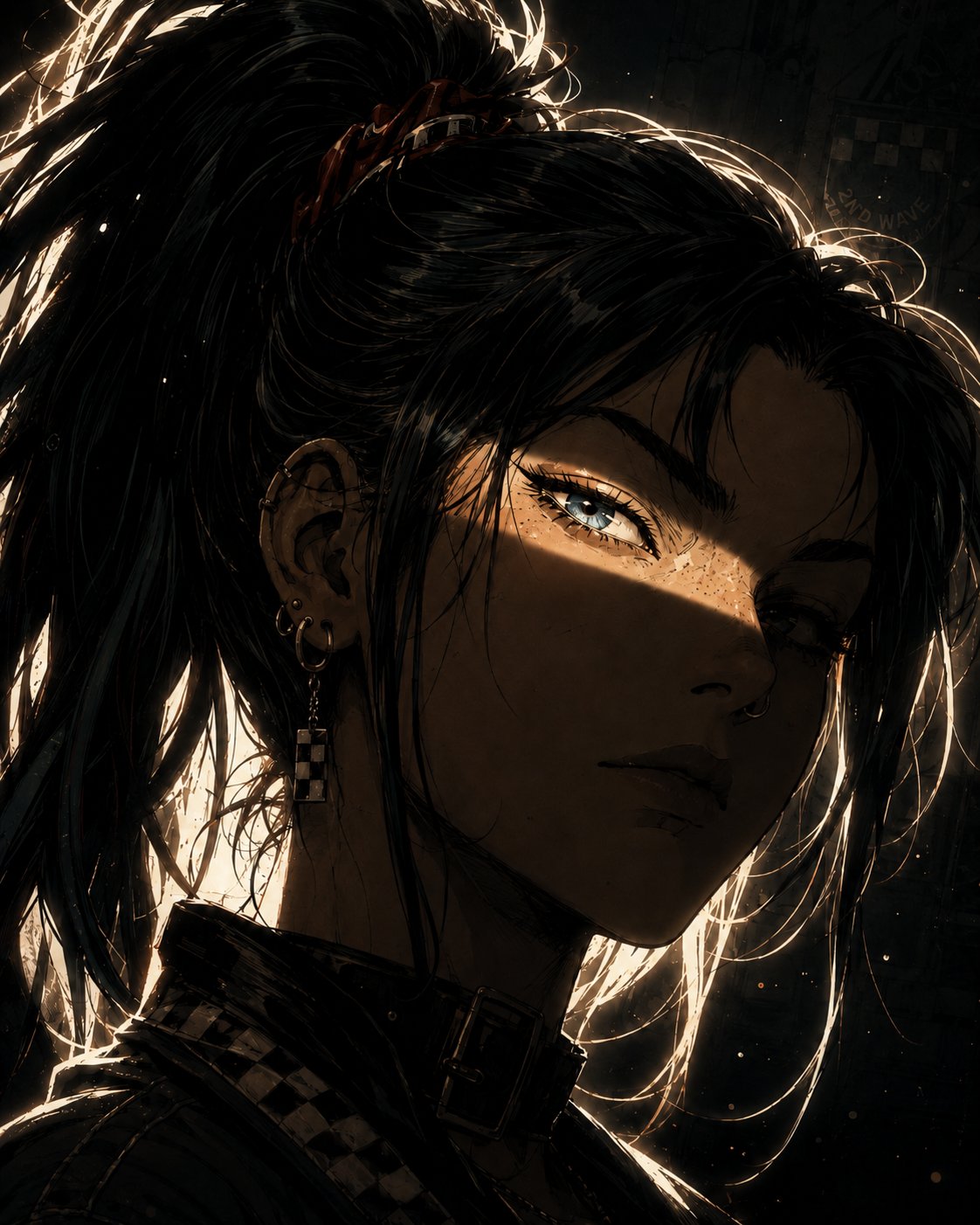
Use extremely heavy backlighting from behind or slightly behind the character, creating a sharp luminous rim around the silhouette, hair, head shape, horns, ears, fins, feathers, armor, or other visible edge features. The backlight should be intense enough to produce blown highlights along selected contours while leaving most of the face submerged in deep shadow.
Keep the face predominantly dark and underexposed. Do not evenly illuminate the facial features. Preserve large areas of near-black shadow across the forehead, cheeks, nose, mouth, jaw, and any species-specific facial structures so the character feels partially concealed by darkness.
A single narrow, hard-edged diagonal beam of light must cut across the face and pass directly through one visible eye. The beam should illuminate the eye and a limited strip of surrounding facial structure while everything immediately above and below it falls back into deep shadow. The illuminated eye becomes the primary focal point of the entire image.
If only one eye is visible in the supplied image, place the beam through that visible eye. If both eyes are visible, choose one eye as the primary illuminated focal point while leaving the other significantly darker. If an eye is canonically hidden, closed, masked, covered, or obscured, do not reveal it merely to satisfy the lighting setup; instead route the beam through an eye that is legitimately visible.
The diagonal light should feel physically sharp and directional, like illumination passing through a narrow architectural opening, mechanical slit, broken panel, distant structure, or other unseen obstruction outside the frame. Do not show the light source itself unless compositionally necessary.
Use hard transitions between light and shadow rather than soft beauty lighting. Allow the light beam to clip into blown highlights on selected skin, fur, scales, metal, fabric, hair, or other materials while preserving the supplied image’s material behavior and color relationships.
Keep the background dark, sparse, atmospheric, and subordinate to the face. It may contain abstract sci-fi structures, distant panels, industrial geometry, vague architectural forms, environmental haze, drifting particles, faint technical details, or layered shadow shapes, but nothing should compete with the illuminated eye. Derive any environmental colors, shapes, motifs, or material accents from the supplied image rather than introducing an unrelated default cyberpunk palette.
The emotional tone should be controlled, magnetic, mysterious, and visually severe. Preserve the character’s established expression language rather than forcing a generic seductive, angry, or stoic expression. The character should feel unmistakably like the supplied individual under radically different cinematic lighting.
Hand-inked sci-fi graphic novel illustration blending European bande dessinée draftsmanship with angular anime intensity; fine scratchy line art, loose drafting marks, bold silhouettes, varied line weight, and expressive distortion; sharp high-contrast lighting with hard rim lights, deep shadows, blown highlights, and dramatic directional illumination; dynamic asymmetrical compositions with tilted angles, aggressive close-ups, dense layered depth, and extreme foreshortening; semi-realistic anatomy, flat cel-shaded colors, muted retro palette, and weathered print texture.
4:5 aspect ratio.