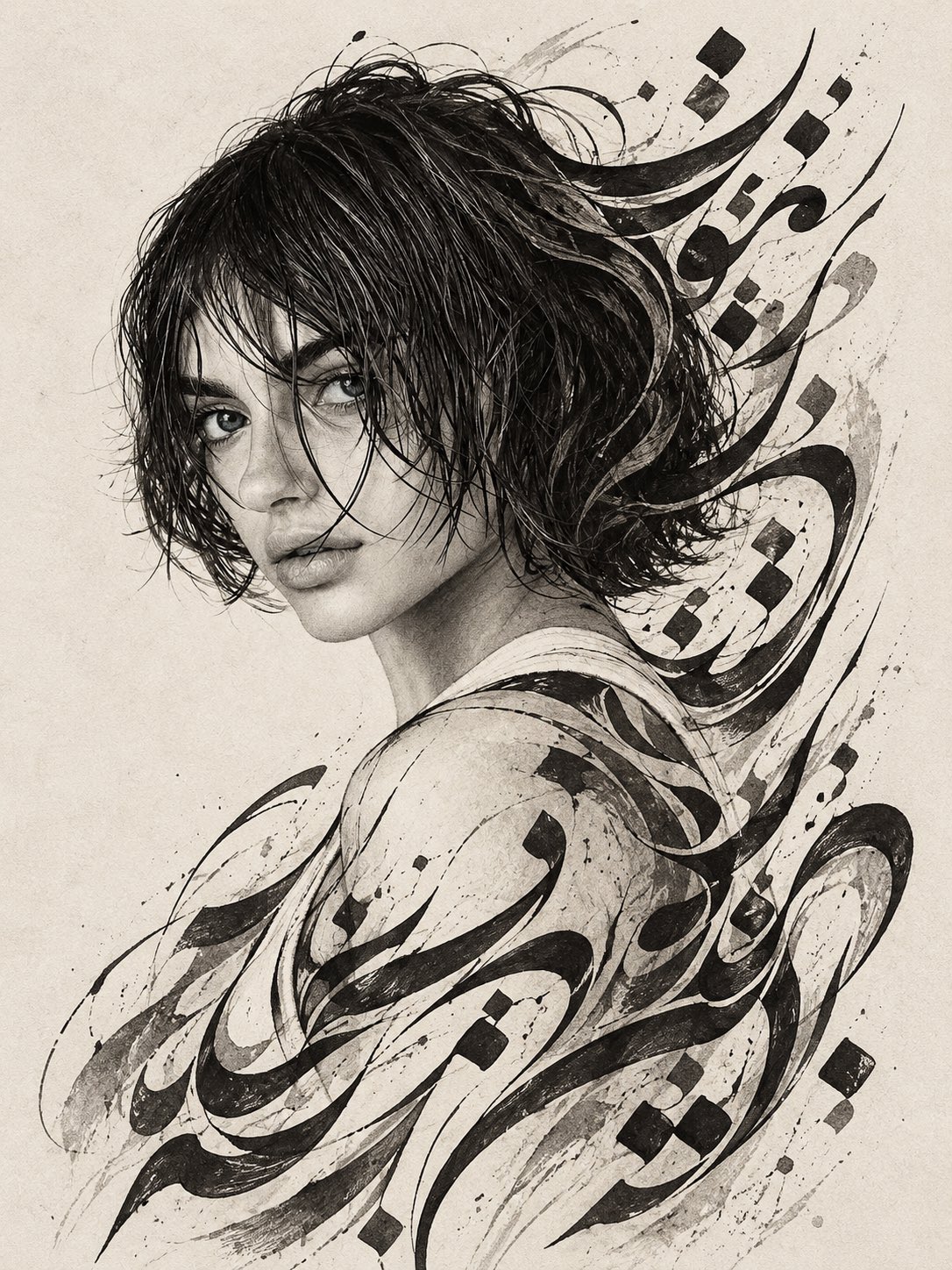
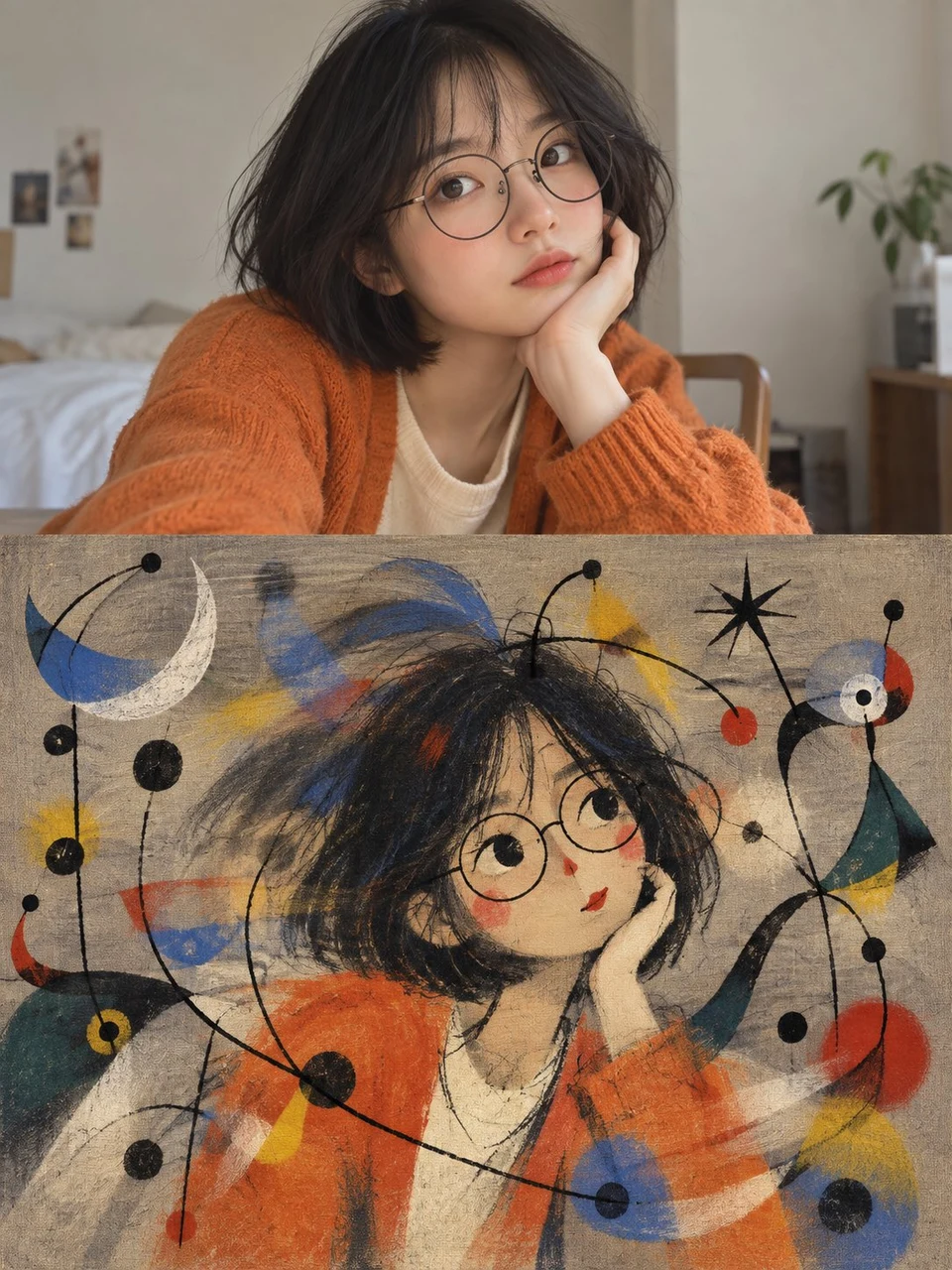
Transform the provided reference portrait into an elegant monochrome Persian calligraphy artwork while preserving the subject’s exact original identity.
STRICT IDENTITY LOCK:
Preserve the reference face exactly as provided. Keep the exact facial anatomy, face shape, bone structure, proportions, feature spacing, eyes, eyebrows, nose, lips, jawline, chin, ears, skin tone, natural skin texture, asymmetry, age, expression, gaze, and head angle.
Absolutely no facial alteration, beautification, enhancement, retouching, reshaping, slimming, smoothing, rejuvenation, idealization, symmetry correction, or reconstruction. Do not make the subject more attractive or stylized. The face must remain unmistakably identical to the reference photograph.
FACE:
Render the face realistically in a delicate monochrome graphite-and-ink drawing style. Preserve all distinctive facial characteristics and natural imperfections from the reference.
GENDER-ADAPTIVE HAIR:
If the reference subject is male, preserve the original masculine appearance and use neat short hair consistent with the reference, subtly merging selected outer hair contours into flowing calligraphic forms.
If the reference subject is female, preserve her exact identity and create elegant medium-to-long flowing hair with approximately the same visual volume and sweeping composition as the style reference. Gradually merge portions of the hair into large graceful calligraphic ribbons.
ABSTRACT CALLIGRAPHY:
Do not use poetry, quotations, readable sentences, names, or meaningful written text.
Create purely decorative Persian Nastaliq-inspired calligraphic forms using abstract strokes, sweeping curves, dots, elongated lines, ink ribbons, and ornamental letter-like shapes.
The calligraphy should evoke traditional Persian calligraphy aesthetically but must not form any intentional readable phrase or specific literary text.
CLOTHING:
Transform the visible clothing and shoulder area into large interconnected abstract Persian calligraphic forms. The flowing strokes must naturally follow the volume, folds, chest, shoulders, and silhouette of the original clothing.
The garment should appear organically constructed from layered black and gray ink calligraphy rather than printed typography.
HAIR AND CLOTHING INTEGRATION:
Seamlessly connect selected calligraphic strokes from the clothing with the flowing ornamental forms surrounding the hair, creating one continuous and harmonious composition around the realistic face.
STYLE:
monochrome Persian fine-art portrait, graphite and watercolor ink, warm ivory paper, delicate pencil facial shading, black and gray ink, Persian Nastaliq-inspired abstract calligraphy, graceful sweeping curves, intricate handmade details, subtle ink variation, elegant negative space, traditional artistic character.
COMPOSITION:
vertical portrait, head and upper torso, realistic face as the clear focal point, large flowing calligraphic garment below, ornamental calligraphic forms extending naturally around and behind the hair, balanced asymmetrical composition, clean light background.
DO NOT:
change the face, beautify the face, alter facial proportions, change age, change ethnicity, modify expression or gaze, enlarge the eyes, reshape the nose or lips, sharpen the jawline, smooth the skin, remove natural imperfections, apply beauty filters, create a generic AI face, add readable poetry, add random sentences, add Latin typography, or add unrelated decorative elements.
ASPECT RATIO:
Strict vertical 3:4 aspect ratio. Compose and frame the entire artwork specifically for a 3:4 vertical canvas. Do not crop, stretch, or change the aspect ratio.